

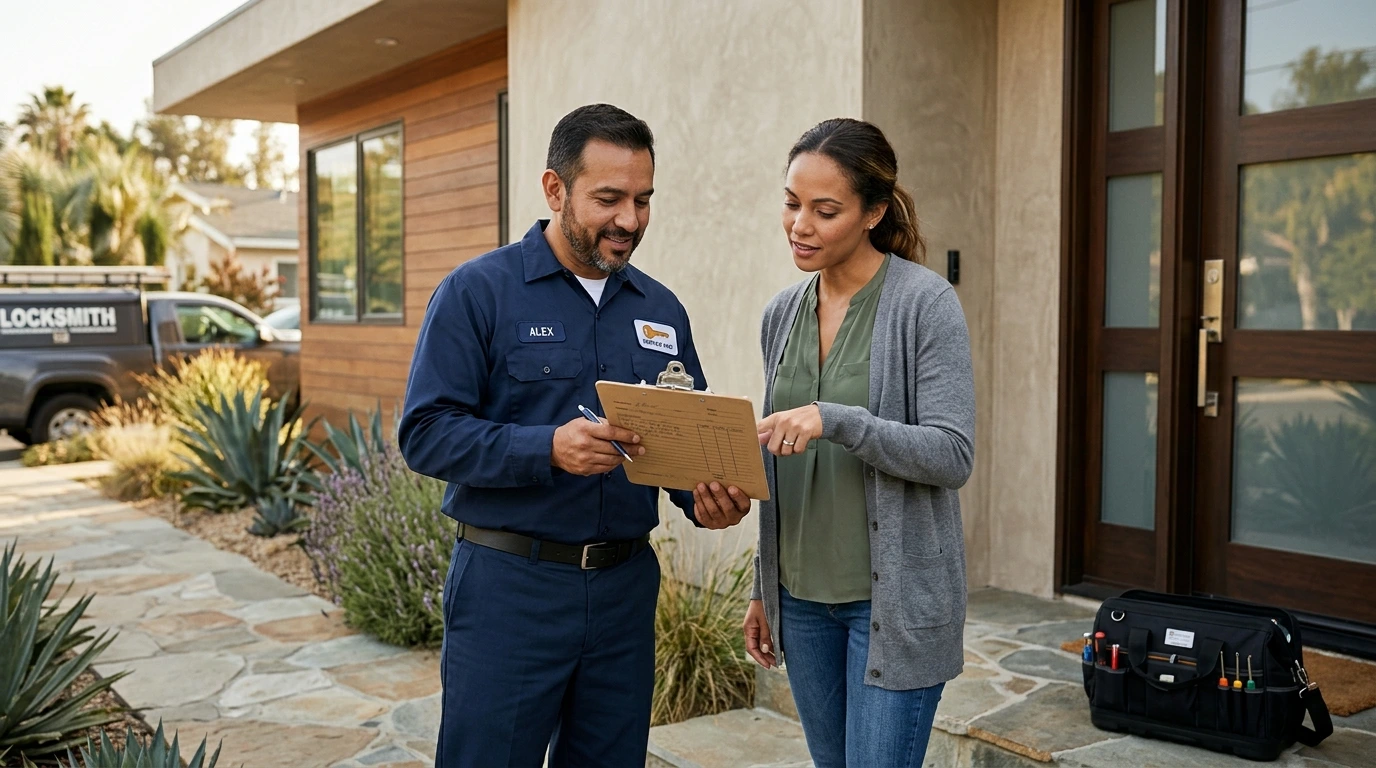

Locked out of your home or car? That is exactly when a suspiciously cheap locksmith can look like the perfect solution. The real problem may start after the technician arrives and the price suddenly changes.
Locksmith scams often rely on urgency. You need to get inside, start your car, or secure your property, so there is little time to compare companies or question a quote. Some dishonest operators take advantage of that pressure with misleading advertisements, unusually low estimates, or prices that change once they reach the job. The Better Business Bureau warns that locksmith scammers may use the names and logos of legitimate companies and advertise extremely low prices before raising the cost on-site. Knowing what to check before handing over the job can help you avoid an expensive surprise.
What Is a Locksmith Bait-and-Switch Scam?
Bait-and-switch pricing starts with an attractive offer that does not match what the customer eventually pays. A locksmith might advertise a very low service price, then add large charges after arriving at the property. The original quote may suddenly become “only for the service call,” while labor, parts, emergency fees, or other charges appear later. Some customers do not discover the full price until the work is already underway.
The Typical Pattern
The situation often looks something like this:
-
You find a locksmith advertising an unusually low price.
-
The person on the phone gives you a vague estimate.
-
Someone arrives and gives a different explanation of the job.
-
The quoted price increases before or during the work.
-
You feel pressured to approve the higher amount because you are already locked out.
That last step is what makes these scams particularly effective. Leaving may not feel like a realistic option once someone has arrived and you urgently need the lock opened.
Tips to Avoid Locksmith Scams and Bait-and-Switch Pricing
Check Who You Are Actually Calling
Search results do not always make it obvious which company you are contacting. BBB has warned that scammers can use the name or logo of a legitimate locksmith to make an advertisement look trustworthy. Take a moment to verify the business before requesting service.
Look for Consistent Business Information
Check whether the company name, phone number, website, address, and other business details match across multiple sources. Search the business name along with terms such as “complaint” or “scam” when something feels wrong. The FTC recommends researching businesses and checking for warning signs before sending money or personal information. Generic answers can also be a warning sign. Someone who cannot clearly identify the business they represent should not receive your trust simply because their advertisement appeared in a search.
Ask for the Price Before Work Begins
A good phone conversation should leave you with a reasonable understanding of what you are paying for. Exact pricing may depend on the lock, vehicle, replacement part, or work required, but the basic charges should not be a mystery. Whether you need an emergency locksmith or a routine service, ask these questions before agreeing to the work:
-
What is the service-call or trip charge?
-
Does the quoted price include labor?
-
Will emergency or after-hours fees apply?
-
Could replacement parts cost extra?
-
What situations could increase the price?
-
Will you tell me before performing additional work?
Written pricing through text or email can be especially useful when available. A clear record gives both sides something to refer back to if the price changes later.
Do Not Let Urgency Make the Decision for You
Getting locked out creates pressure. Scammers understand that pressure and may use it to push customers into accepting a price they would normally question. The FTC identifies pressure to act immediately as a common scam warning sign and advises consumers to slow down and verify who they are dealing with. Take a few minutes to check the company even during an emergency. Verify the business name, ask about pricing, and make sure you understand what the technician plans to do before giving approval.
Quick Check:
If someone says, “You have to decide right now,” stop and ask why. A genuine emergency locksmith should still explain the work and charges clearly.
Be Careful When the Technician Arrives
The person who arrives should be able to identify the business they represent. Ask for identification or company information if you are unsure who you are dealing with. Pay attention to the estimate before work begins. A technician who suddenly quotes several times the amount discussed on the phone should be asked to explain every additional charge.
Watch for Unnecessary Replacement
Lockouts do not always require drilling or replacing the entire lock. The appropriate solution depends on the type of lock, the situation, and whether the lock itself is damaged. Question a recommendation to replace hardware when you were originally quoted for a simple lockout service. Replacement may sometimes be necessary, but the reason should be explained before the work starts.
For home lock issues, a residential locksmith can assess whether repair, rekeying, or replacement is appropriate for the situation.
Do Not Ignore the Way a Locksmith Wants to Be Paid
Payment method alone does not prove that a locksmith is dishonest. Still, unusual payment demands deserve caution, especially when combined with pressure or unexplained charges. The FTC warns that scammers often prefer payment methods that make money difficult to recover, including wire transfers, cryptocurrency, gift cards, and certain payment apps.
Ask for a receipt showing the business name, services performed, charges, and total amount paid. Keep the receipt and any messages or estimates related to the job.
What Should You Do If the Price Changes?
Do not approve extra work without asking what changed. Request an updated price before allowing the technician to continue. Questions such as these can clear up the situation quickly:
-
What caused the price to increase?
-
Which part of the original estimate changed?
-
Is this additional work necessary?
-
What will the final total be if I approve it?
Refusing to explain the new price or pressuring you to pay immediately is a serious warning sign.
How to Find a Locksmith Before You Need One
The easiest time to research a locksmith is before you are standing outside a locked door. Save the contact information of a company you have already checked, especially if you regularly need automotive, residential, or commercial locksmith services. If you often experience vehicle key issues, researching an automotive locksmith ahead of time can help you prepare.
Research can include checking reviews, business information, service areas, pricing policies, and how clearly the company explains its services. No single review or rating proves that a business is legitimate, so look for consistent information across several sources.
Keep a Locksmith Contact Handy
Saving a verified number now can prevent a rushed search later. You will have more time to compare information when you are not dealing with an immediate lockout. Emergency planning may seem unnecessary until the key breaks, the lock stops working, or the car keys disappear. Having a trusted contact ready can remove much of the pressure that scammers depend on.
Final Thoughts: Choose a Locksmith That Gives You Clear Answers
Getting locked out is stressful enough without wondering whether the person you called is going to change the price after arriving. Clear communication can make a major difference.
Hero Locksmith believes customers should know what they are paying for before work begins. The team provides locksmith services with clear communication about the job, pricing, and available solutions, helping customers make an informed decision instead of feeling pressured at the door.
Whether you need help with a home lockout, car keys, lock repair, or another locksmith issue, start with a company that answers your questions and explains the work. Explore Hero Locksmith’s services and discuss your needs before booking. When the price and service are clear from the beginning, there is far less room for a bait-and-switch surprise.
Frequently Asked Questions
1. How can I avoid locksmith scams?
Check the locksmith’s business name, website, reviews, and contact information before booking. Ask for a clear estimate that includes service fees, labor, mileage, and parts before work begins.
2. What is a locksmith bait-and-switch scam?
A bait-and-switch locksmith scam starts with a very low price to get you to agree to the service. Once the locksmith arrives, the final price suddenly increases because of extra fees or claims about the job.
3. Why do some locksmiths quote a very low price over the phone?
Some dishonest locksmiths use extremely low quotes to attract customers who need emergency help. BBB warns that the price may increase significantly once the locksmith reaches the property.
4. How do I know if a locksmith quote is legitimate?
Ask whether the quoted price includes the service call, labor, mileage, parts, and emergency fees. Request the total estimate before approving any work.
5. What should I do if a locksmith changes the price after arriving?
Stop the work and ask why the price changed. If the new estimate does not match what you were quoted and the additional charges were not disclosed, consider refusing the service and contacting another locksmith.
6. How can I tell if a locksmith near me is real?
Verify the company name, website, phone number, reviews, and business information independently. Search results can sometimes contain misleading listings or numbers that appear to represent another company.
7. Should I hire a locksmith advertising an extremely cheap service price?
Treat unusually cheap prices as a reason to ask more questions rather than assuming you found a great deal. Confirm what the advertised price actually includes before booking.
8. What fees should a locksmith tell me about before starting work?
Ask about the service call, labor, mileage or travel charges, parts, emergency fees, and any other possible costs. Getting these details upfront can help prevent unexpected charges.