

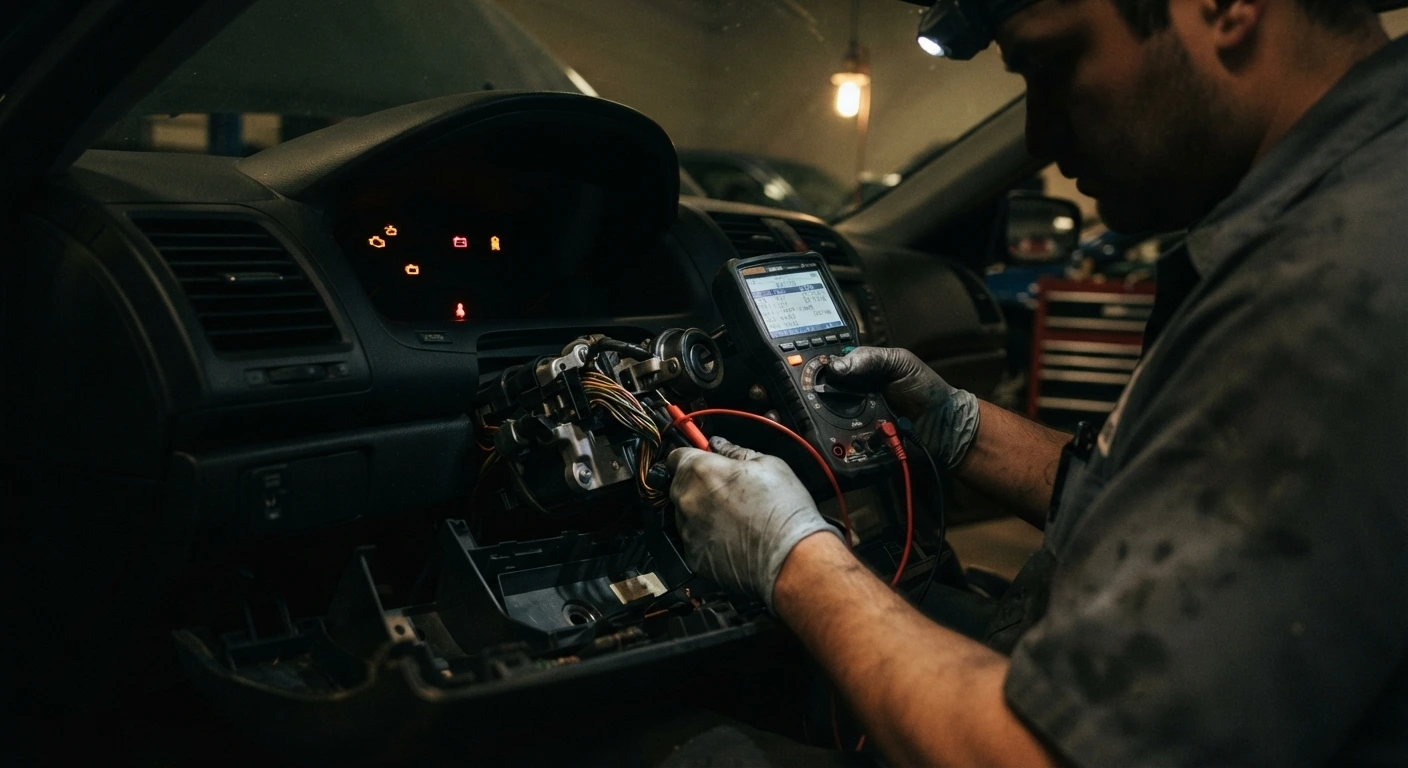

Your car cranks fine one morning, then the next day the key turns, and nothing happens. No lights, no sound, just silence in the driver’s seat while you are already running late. This small part behind your steering column controls far more than most drivers know, and when it starts to give up, your whole car feels it. Catching the early signals means you can plan an ignition switch replacement on your own terms instead of waiting for a tow truck on the side of the road.
The ignition switch sends power to your dashboard, fuel pump, starter motor, and the electronic modules that keep the engine alive. When you turn the key or press the button, it bridges electrical circuits, enabling the starter motor to crank the engine. After thousands of starts, the metal contacts inside wear down, and that is when the trouble begins. Below are the signs our automotive locksmith in Walnut Creek sees most often, so you know what your car is trying to tell you.
The Engine Does Not Crank or Make a Sound
This is the sign drivers notice first. You turn the key, and the engine does not crank, or you get a faint click and nothing more. When you turn the key and the starter motor does not make any sound, it indicates a problem with the ignition switch. The switch is not passing the electrical signal to the starter, so the engine never gets the message to fire up.
A dead battery can look the same from the driver’s seat, which is why a proper diagnosis matters. If your lights and radio still work but the engine stays quiet, the battery is likely fine, and the switch becomes the prime suspect. This is a good moment to call a professional for an ignition switch replacement rather than guessing and swapping parts you do not need.
The Engine Starts and Then Stops
Few things rattle a driver more than an engine that roars to life and then quits on its own. This happens when the switch powers the starting position but fails to hold power in the “on” position that keeps the engine running. The fuel and ignition systems lose their supply the second the switch loses contact, and the car stalls.
The car may restart immediately, only to stall again because inconsistent power to the fuel pump or ignition system confuses the whole starting process. Drivers often chase fuel pump repairs for weeks over this, but if the ignition switch is failing, no amount of fuel system repairs will fix the issue.
Your Car Stalls While You Are Driving
A stall in the driveway is annoying. A stall on the freeway is dangerous. A failing ignition switch can cut power to the engine while you’re moving. The internal contacts lose their grip for a split second, power drops, and the engine shuts off with traffic all around you.
You lose more than just the engine in that moment. Power steering gets heavy, and power brakes weaken, which turns a simple problem into a safety risk. When your car shuts off mid-drive with no warning, treat it as urgent and get the ignition system checked right away.
The Key Sticks or Refuses to Turn
Sometimes the problem is mechanical rather than electrical. The key sticks, resists, or refuses to turn at all. If the ignition key gets stuck when turning on the car or removing the key, it may be a sign of a worn out ignition switch. The internal parts have worn to the point where the key and switch no longer line up the way they should.
Before you force it, a quick word of caution: pushing hard on a stubborn key can snap it off inside the cylinder, and now you have two problems instead of one. If your key ever breaks off in there, our car key extraction service can remove it without damaging your ignition. A gentle touch and the right tools save you a much bigger repair.
Flickering or Dead Dashboard Lights
Your dashboard is a window into your car’s electrical health. When the ignition switch struggles, the lights on your panel flicker, dim, or cut out completely. Another symptom to be aware of is flickering or failure of the dashboard lights when the key is turned. This points to an unsteady power supply moving through a worn switch.
These flickers tend to show up before a full breakdown, which makes them a helpful early warning. Watch for these patterns:
- Dashboard lights dim or flicker while the key sits in the “on” position
- The panel goes dark for a second, then comes back
- Warning lights appear and vanish for no clear reason
- Gauges drop to zero and jump back up while you drive
The Radio and Windows Cut Out on Their Own
The ignition switch feeds power to your radio, power windows, wipers, and other accessories in its first position. When it starts failing, these items lose power at random. A bad ignition switch can cause your vehicle to exhibit symptoms like a no-start condition, stalling, intermittent loss of lighting and other accessories, a silent starter motor, and difficulty in turning the key.
You might see your radio reset in the middle of a song or your windows stop halfway. On their own, these feel minor, but paired with hard starts or stalling, they build a clear picture of a switch on its way out.
The Key Stays Warm or the Car Runs After Key Removal
Two quieter signs get missed often. First, heat. If the key is warm after driving, the switch may be overheating internally. Worn contacts create resistance, resistance creates heat, and that heat travels up into your key.
Second, a car that keeps running after you pull the key out or shut off the engine. This tells you the switch is not fully breaking the electrical connection. Both signs mean the internal contacts are no longer doing their job cleanly, and both are worth a professional look before they leave you stranded.
Your Battery Keeps Draining Overnight
A switch that will not fully shut off keeps circuits alive after you park. Those circuits quietly pull from your battery all night. If the switch doesn’t fully turn off, it can leave electrical systems running and drain the battery.
Drivers usually blame the battery first, buy a new one, and watch it die again a week later. If your fresh battery keeps going flat with no lights left on, the ignition switch deserves a hard look. You are treating the symptom while the real cause sits behind the steering column.
Silent Starter With a Healthy Battery
When you turn the key and the starter stays completely silent even though your battery is strong, the signal is getting lost between the two. The ignition switch is the messenger, and a worn one drops the message. Broken springs, worn ignition switch contacts, and temperature problems are common reasons why the ignition switch can fail.
This is different from a slow, groaning crank, which usually points to the battery or starter itself. Total silence with good power almost always sends the trail back to the switch or its wiring.
Intermittent Problems That Come and Go
The most frustrating sign is the one that hides. Your car acts up on Monday, runs perfectly on Tuesday, then stalls again on Thursday. When the internal contacts inside the switch wear out, they create tiny power interruptions. These short losses of power come and go as the worn contacts make and break connection.
Do not wait for the “good days” to fool you into ignoring it. Intermittent faults almost always grow into permanent ones, usually at the worst possible time. An early inspection while the problem is still occasional saves you the stranding later.
Switch or Lock Cylinder: Why the Difference Matters
Many drivers use these terms as one, but they are two parts with two jobs. The lock cylinder is the mechanical piece your key goes into. The ignition switch is the electrical piece behind it that actually powers your car. Many times when a driver thinks they have a bad ignition switch, they actually have a sticking lock cylinder.
Getting this right saves you money. A worn cylinder often just needs rekeying to your existing key, while a failed electrical switch is a different repair. This is exactly why a proper diagnosis beats guesswork, and where a skilled auto locksmith in Walnut Creek earns their keep by testing before replacing.
What Ignition Switch Replacement Usually Costs
Cost is the first question most drivers ask, and it is a fair one. Prices swing based on your make, model, and whether the switch or cylinder is the culprit. Replacing an ignition switch or lock cylinder costs $130 to $700, typically around $300. Push-start and luxury vehicles with immobilizer systems sit at the higher end because they need extra programming.
Here is a simple way to think about who to call:
- Worn lock cylinder: an automotive locksmith is often the better value and can rekey it to your current key
- Failed electrical switch or immobilizer issue: needs testing and sometimes programming
- Damaged from attempted theft: may need the full assembly, which raises the price
A mobile locksmith also saves you the tow. When your car will not start at home or in a parking lot, our mobile locksmith service comes to you and handles the job on the spot.
Do Not Let a Small Sign Turn into a Dead Car: Call Us Today
Every sign on this list starts small and grows. The flicker becomes a stall. The sticky key becomes a broken one. The slow morning start becomes a car that will not move at all, usually on the day you can least afford it. Waiting rarely makes an ignition problem cheaper or easier, and it often ends with a tow and a ruined schedule.
You do not have to reach that point. If your car shows even one of these warning signs, the smart move is a proper diagnosis before the switch quits for good. Hero Locksmith offers fast, certified, and fairly priced ignition switch replacement across Walnut Creek and the surrounding East Bay, with mobile service that reaches you wherever you are stuck. Contact us and get your car back to starting the first time, every time.